How can I be a “good guest”?
Thoughts on patriotism, cultural appropriation and neutrality as an expat
Patriotism is a social phenomenon I have struggled to relate to ever since I was a child. A deep sense of connection to my fatherland or pride in my home country: for as long as I can remember, these feelings have never really reached me.
You could argue that this is down to my German nationality, which, given its history, brings particular challenges in this respect. The line between patriotism and nationalism feels thin and dangerous. But beyond that, I keep asking myself what pride in one’s homeland is actually based on. On the fact that you were born there? How can this mundane fact, over which you had no influence at all, trigger such feelings?
As early as 1952, the French anthropologist Claude Lévi-Strauss described in his UNESCO publication Race and History (section 3: Ethnocentrism) how peoples often refer to themselves as “the good ones” or “the excellent ones”. Is it a basic human need to see oneself and one’s “group” or “country” as something special, particularly beautiful or “right”? And if so, why am I missing this feeling? Was I perhaps born in the wrong country?
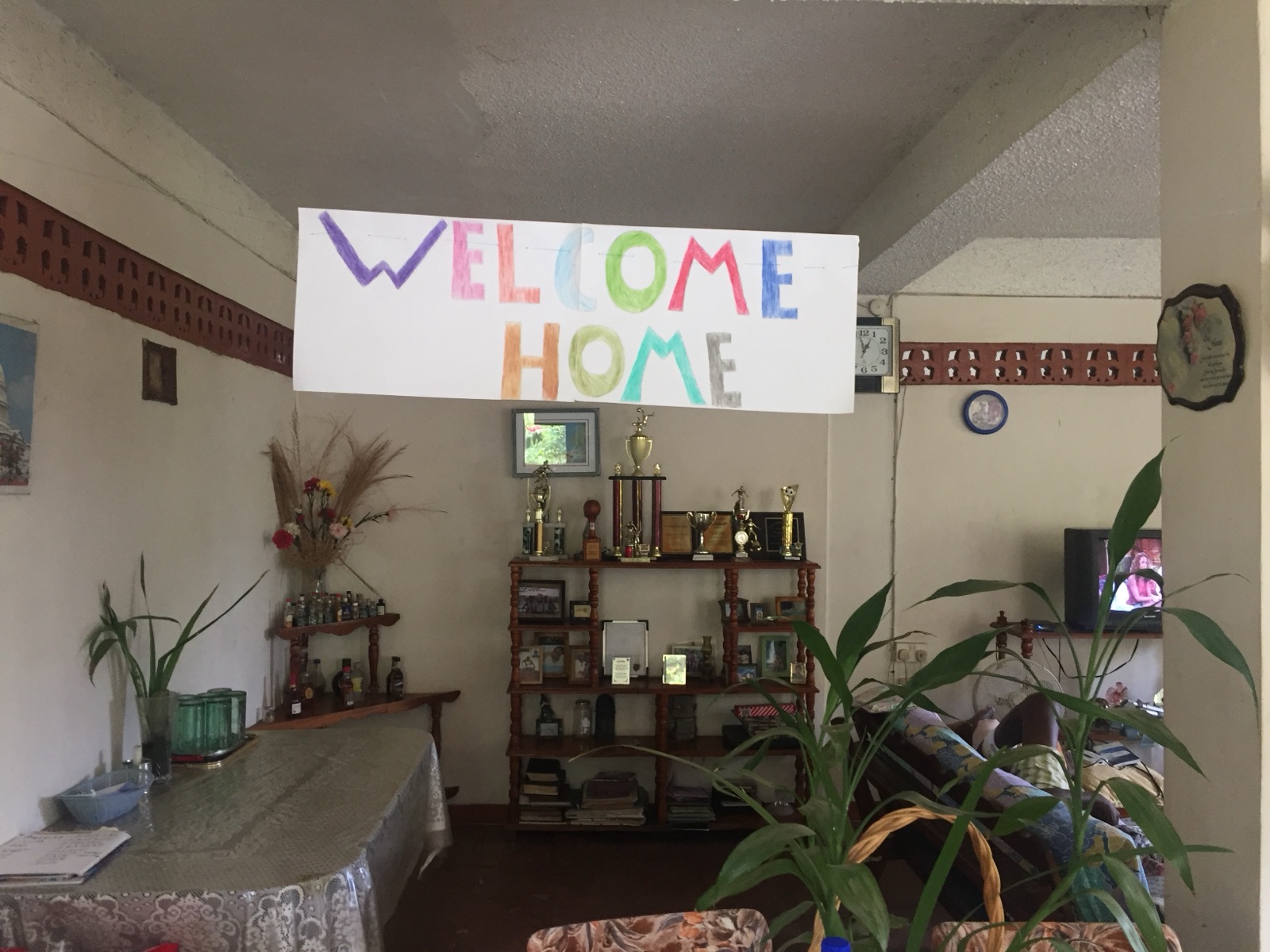
I first experienced a sense of belonging in 2011, right after finishing school, around 7,400 km away from Germany. The island of Dominica was to become a formative place for me and will play a central role in future blog posts, too. As one of the few young white women on this island of 70,000 people, I felt a deep connection with the people, the culture and the nature of the country. Patriotism in a country to which I belong neither by appearance nor on paper.
So how do you behave when you are a guest in a country you nevertheless feel you belong to?
The answer is fairly simple: respectfully! Putting this adjective into practice, however, brings all kinds of challenges: how much room does a respectful guest have, and what “limits” apply? This is where words like neutrality come into play. As a non-citizen, may I take part in cultural practices, for example? Or criticise the local government?
The first aspect, cultural practices and cultural appropriation, has become a hot topic, especially on social media. I agree with the criticism that cultural symbols or practices are sometimes commercialised without the culture of origin benefiting (especially financially). Still, I am also a firm believer that cultures should be shared. I understand culture as something alive and changeable, not “static”. In my view, rigid cultural circles in which only certain people are allowed to live something out do not lead to peaceful coexistence. Nor is that the practice I have experienced in countries outside Germany. On the contrary, the local population welcomed participation in cultural events and practices. Respect and sensitivity are, of course, the foundation.
In practice, I find it much more difficult to deal with criticism of governments, politics or behaviour in a foreign country. As a guest in a country, do I have to stay neutral, or may I have a voice? And if so, how loud may it be?
Early field researchers such as Bronisław Malinowski always preached the classic anthropological ideal: neutrality in the field. One’s own attitudes or morals should in no way influence the description of other peoples. But can ethnographic field research be compared with living in another country? As a guest in a country, am I obliged to be as neutral as possible?
To be honest, I have not yet found a definitive answer to these questions. I have spent most of my time outside Germany in Dominica. For most of my twenties, I was able to commute between Germany and the Caribbean island in the West Indies. There, my roles alternated between anthropological field researcher and temporary resident. And it was the anthropological perspective that, most of the time, demanded that “Malinowskian neutrality” of me. Does that mean I had (or have) no opinion or stance, for example on the local government? Of course not, and I did voice criticism. Mostly among local friends, where I was simply a normal part of the group and my views were welcome.
But have I ever publicly voiced my opinion on, or criticised, how homosexuality is dealt with? No. Is that because I’m a spineless coward? No. In my judgement, it has (so far) not been my place or my right to voice this criticism. In this strongly Christian island nation, the topic of homosexuality is highly emotionally charged, both socially and politically. Even after fifteen years of Dominica, I have not yet felt I belong enough to dive into these depths of public debate. And the truth is also that my opinion as a rather left-leaning, unbaptised white woman simply doesn’t matter here, wouldn’t change the status quo and would certainly cause enormous trouble. If I were ever asked about it, I would not hold back my views. But I’m fairly sure that Dominicans won’t care what I have to say about it in the next fifteen years either. From what I have observed, change has to come from the island’s own people.
So we are slowly approaching possible answers to the question of what makes a “good guest”. I believe the key is to be aware of your role. And just as I don’t see culture as a rigid construct, my roles as a guest in another country are not fixed either. I believe this is also where the core of respect lies:
Know your role in each situation.
In theory, this all sounds so obvious and simple, but in practice it takes a lot of time spent observing and understanding your surroundings. Perhaps a good guest should always first take on the role of a neutral anthropological field researcher before exploring new roles in their chosen home. In everyday life, however, observing and understanding initially means holding back your own stance and opinions. Or, to put it bluntly: “Mouth shut, eyes open!” That doesn’t mean you can’t have a voice, but rather that you should slowly develop it in the harmonious key of the country you are in.
And if we stay with the musical metaphor, it takes many rehearsals before a song sits right with all its chords and voices. My everyday practice as a fairly new expat in Cyprus (the European part) is also only at the very beginning of its field research. It will be exciting to see how my voice on this island develops over the coming years.
This article was originally written in German.
Linda Röhl